✓ Increase household income and business performance
E-Mobility for Impact Pilot
Electric bicycles for last-mile mobility.
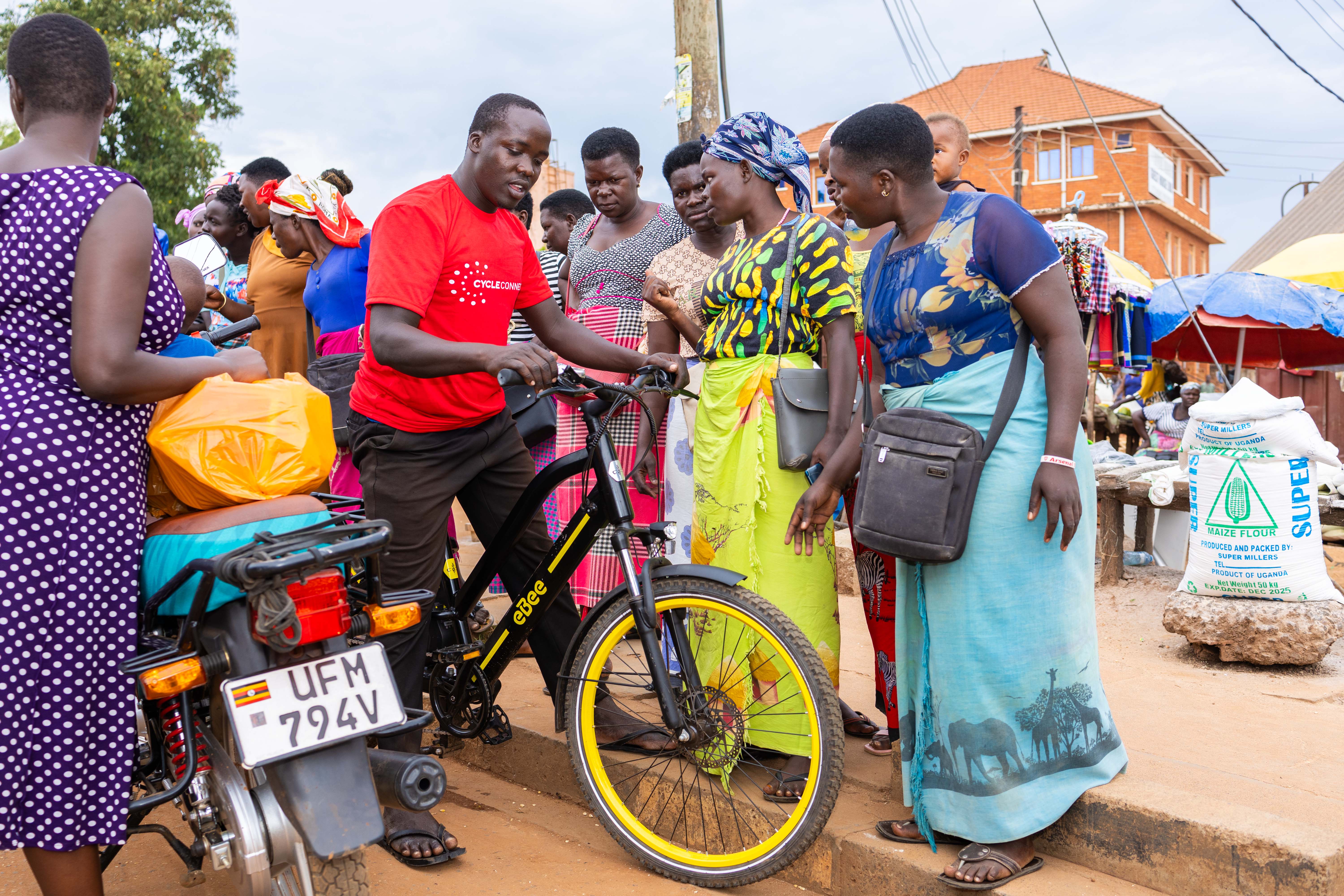
Electric bicycles provide sustainable mobility, helping farmers reduce transport costs and access markets more easily.
Why We Launched the Pilot
Mobility is a barrier to rural opportunity.
Mobility is one of the most overlooked barriers to economic development in rural communities. Across Northern Uganda, smallholder farmers and rural entrepreneurs often spend significant time and resources transporting produce, accessing markets, purchasing inputs, and reaching customers. Long travel distances, high transport costs, and limited transport options reduce productivity and restrict income-generating opportunities.
Recognizing these challenges, Cycle Connect launched the E-Mobility for Impact Pilot in 2025 to explore whether electric bicycles could serve as productive assets capable of improving livelihoods. Supported by Siemens Stiftung and implemented in partnership with eBee Mobility, the pilot was designed to assess whether financed electric bicycles could improve income, market access, transportation efficiency, and rural e-mobility financing solutions.
✓ Improve market access and transportation efficiency
✓ Reduce transport costs while promoting clean and sustainable mobility
✓ Generate evidence for scalable rural e-mobility financing solutions
Pilot Findings
Income, access, and time efficiency.
8.7%
Average monthly income increase
Beneficiaries experienced an average monthly income increase from UGX 351,315 to UGX 400,000.
3.0 km
Average market travel distance
Average market travel distance increased from 2.7 kilometres to 3.0 kilometres.
3.7 hrs
Average transport time
Average time spent on transport and market-related activities reduced from 7.6 hours to 3.7 hours.
Increasing Income
Better mobility creates economic opportunity.
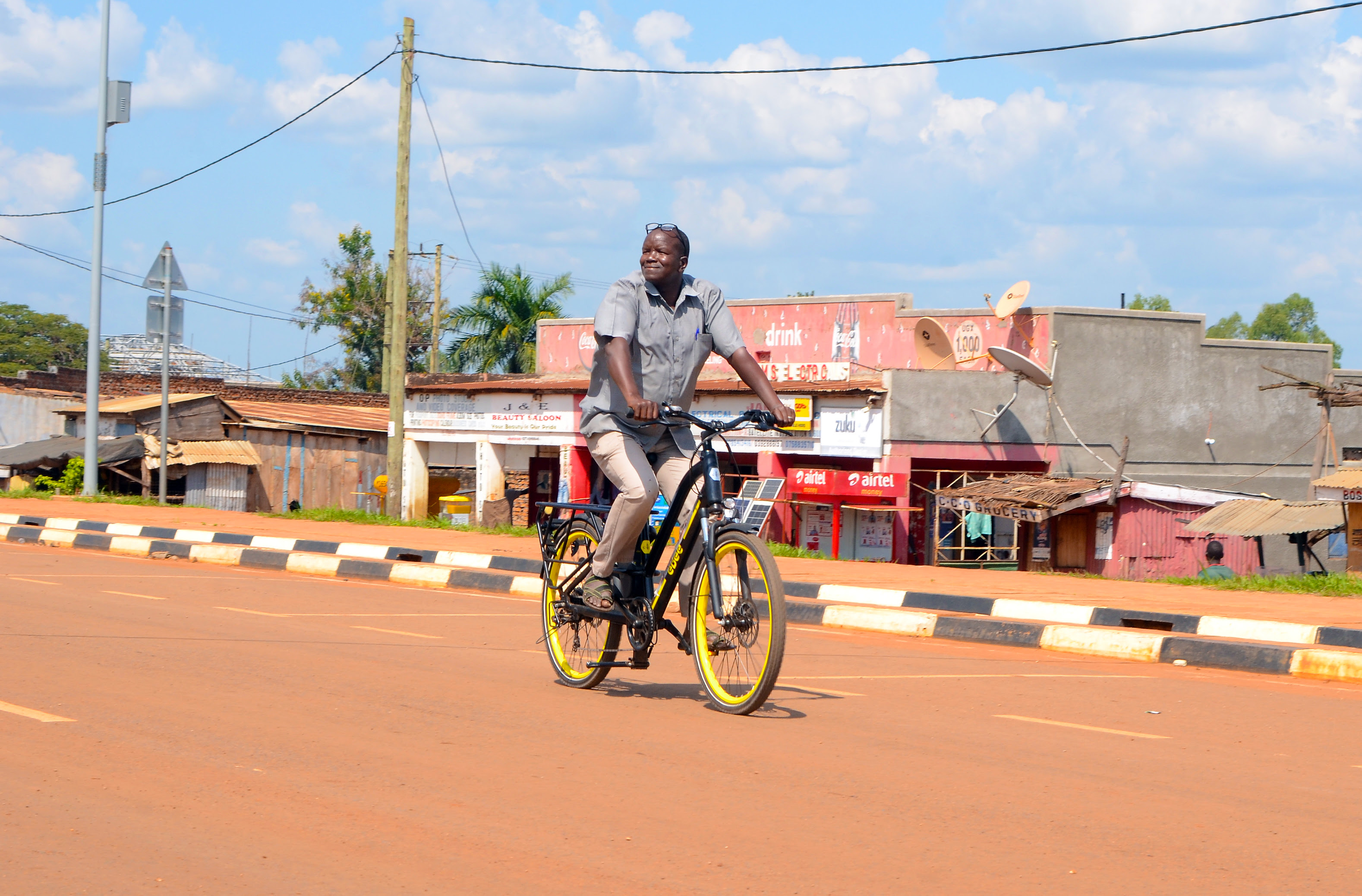
Improved mobility is creating measurable economic benefits for participating households. The midline assessment found that beneficiaries experienced an average monthly income increase of 8.7%, rising from UGX 351,315 to UGX 400,000.
For many participants, access to electric bicycles enabled them to reach customers more frequently, expand trading activities, transport larger quantities of goods, and access markets that were previously difficult or costly to reach.
Market Access
More access, less time lost.
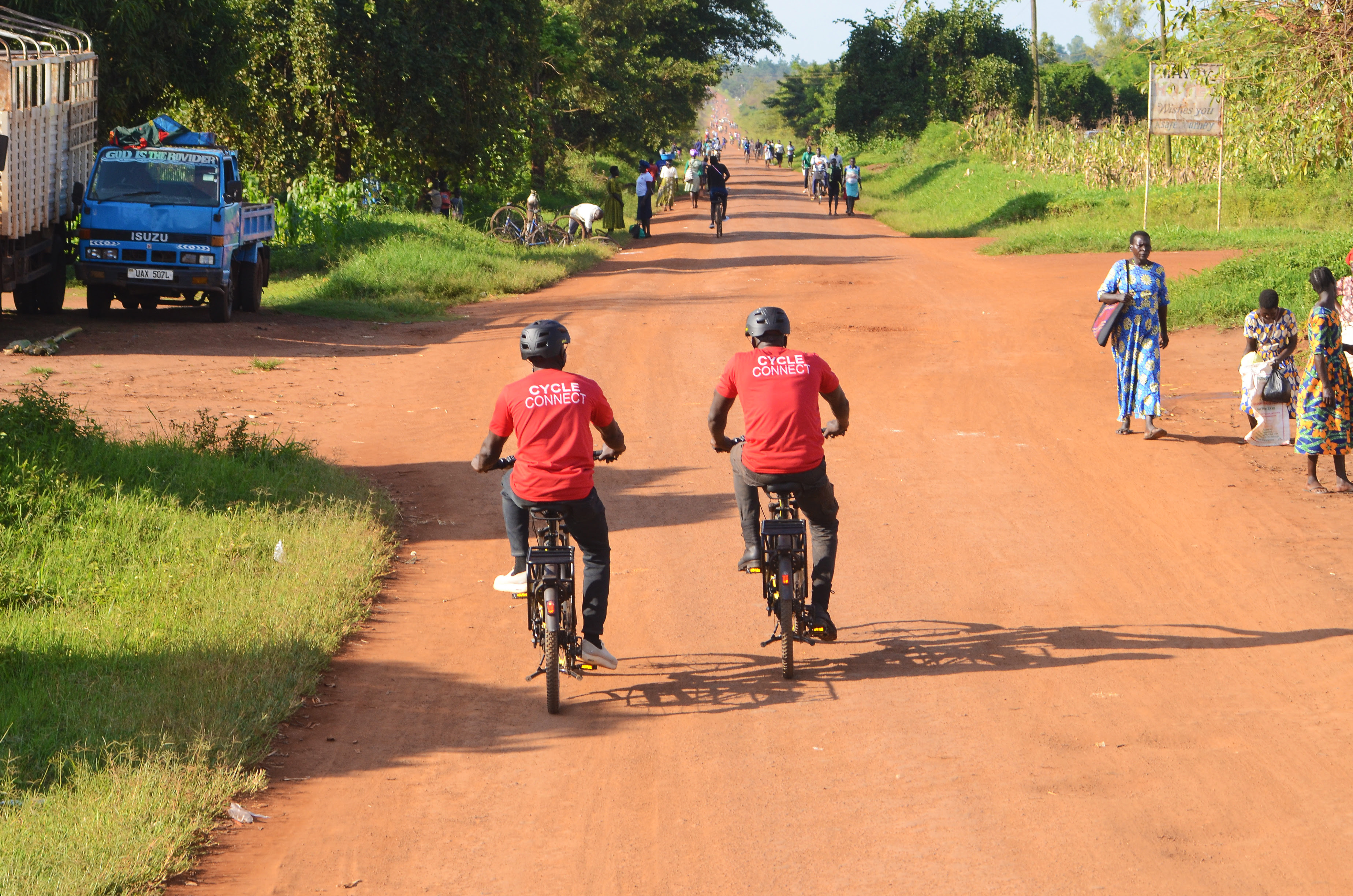
Access to reliable mobility is expanding economic opportunities while reducing the time burden associated with transportation. Beneficiaries increased their average market travel distance from 2.7 kilometres to 3.0 kilometres, demonstrating improved access to trading opportunities and customer networks.
At the same time, average time spent on transport and market-related activities reduced dramatically from 7.6 hours to 3.7 hours.
✓ Farming activities
✓ Business expansion
✓ Household responsibilities
✓ Additional income-generating opportunities
Affordable and Sustainable Mobility
Clean mobility for underserved communities.
The pilot also highlights the environmental and economic benefits of electric mobility. Participants consistently reported that electric bicycles provide a practical alternative to fuel-dependent transportation. Charging costs are significantly lower than fuel expenses, while maintenance requirements are comparatively affordable.
As Uganda advances toward sustainable development goals, electric mobility offers a promising opportunity to simultaneously support economic growth, climate resilience, and rural inclusion.
✓ Reduced transport expenditure
✓ Lower dependence on fuel
✓ Improved transport reliability
✓ Environmentally responsible mobility
Mobility as a Productive Asset
More than transportation.
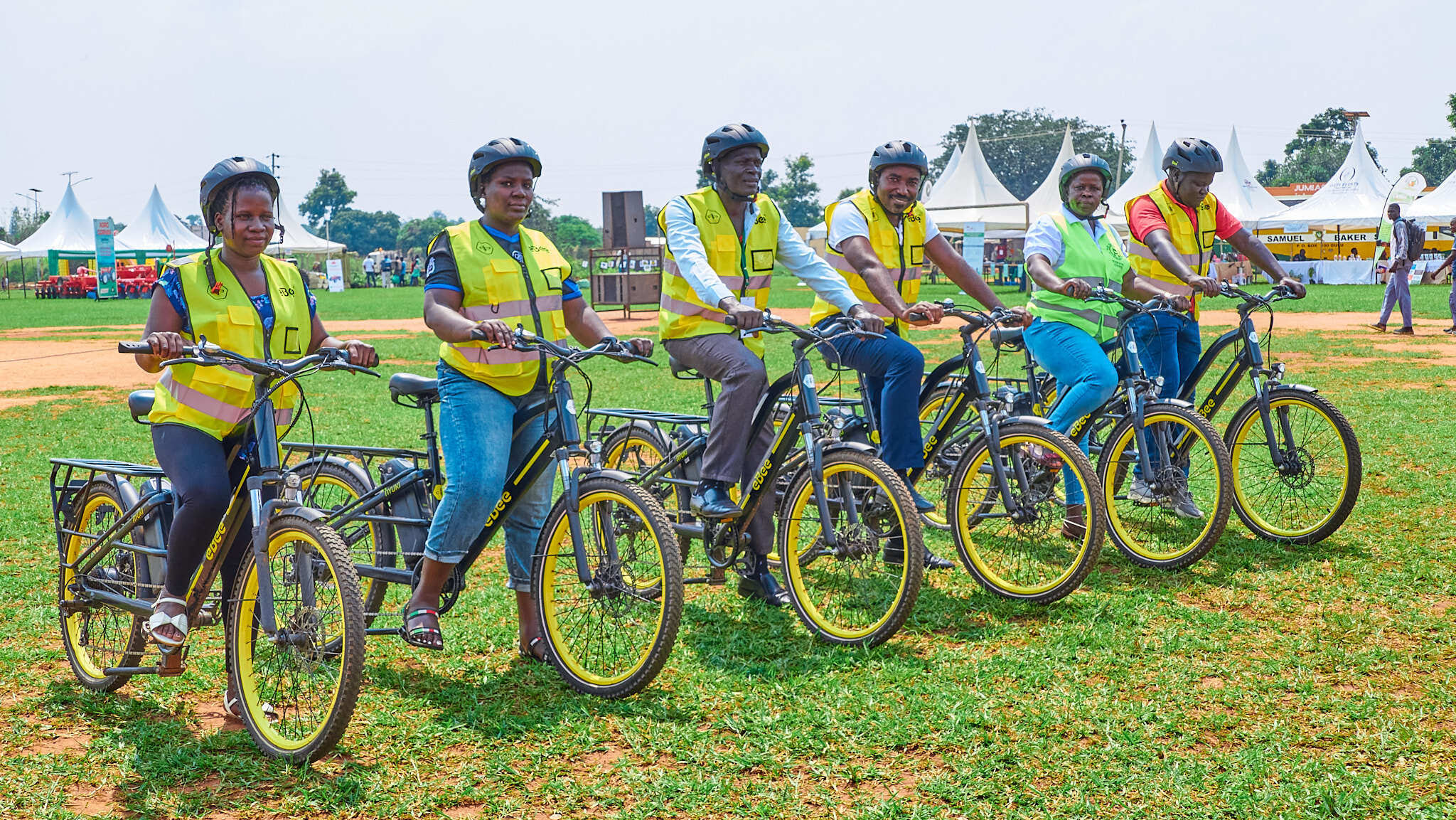
For many participants, the electric bicycle has become much more than a means of transportation. It has become a business tool. Beneficiaries report reaching markets earlier, carrying more produce, serving more customers, and spending less money on transportation.
“Before receiving the electric bicycle, I spent most of my day travelling. Today I can transport my produce more easily, reach customers faster, and spend more time growing my business.”
E-Mobility in Action
Productive mobility for the last mile.
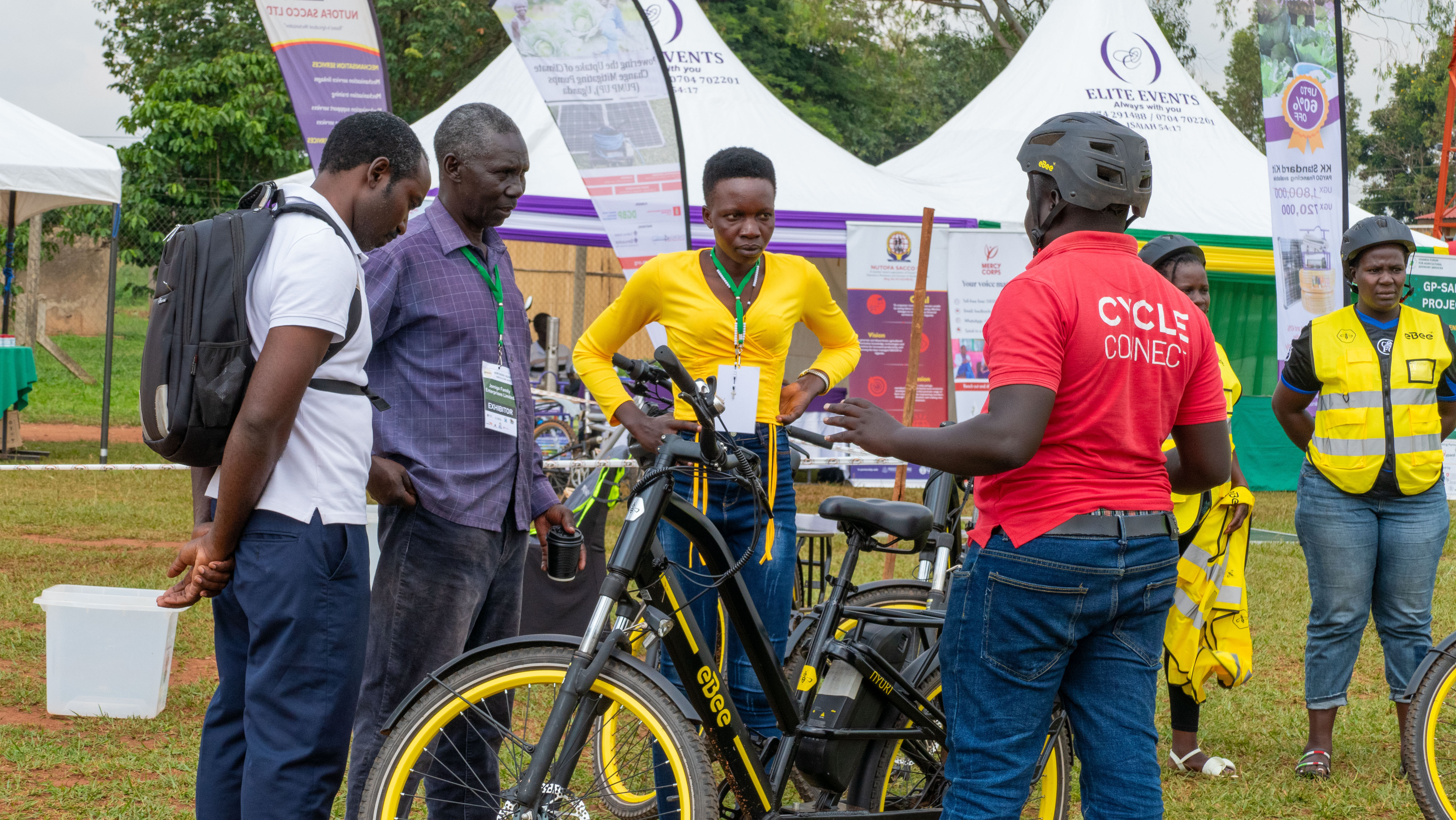
Electric Bicycles
Clean mobility can unlock opportunity.
Electric bicycles show how productive mobility can help last-mile farmers and rural entrepreneurs reduce costs, save time, access markets, and build more resilient livelihoods.